rituals · guide
The 10-Second Grounding Ritual With Tactile Jewelry
How a quiet ten-second tactile pause using a spinning prayer wheel pendant or bead bracelet brings calm focus back to crowded workdays — no app or mat required.
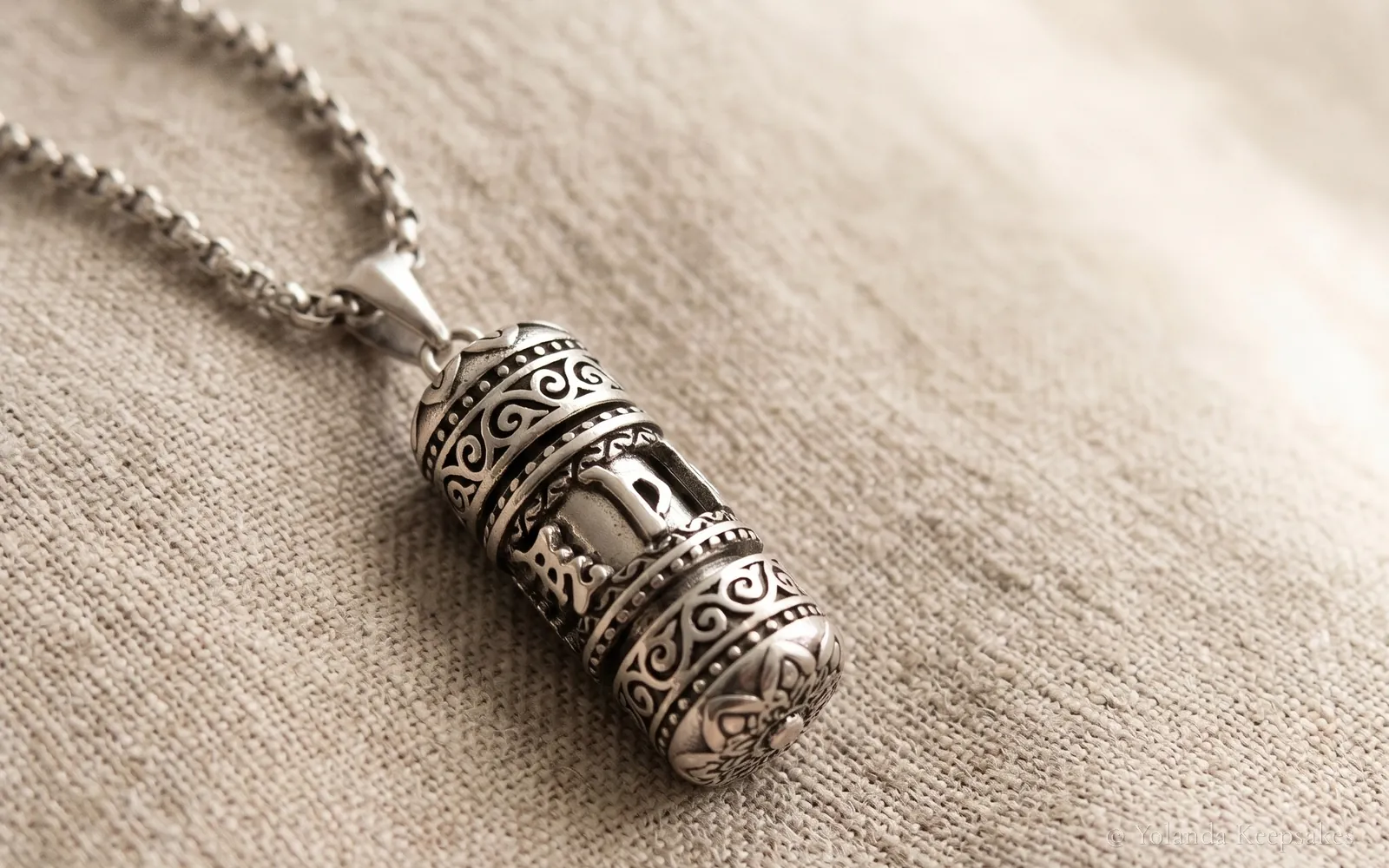
Most mindfulness advice assumes you have twenty uninterrupted minutes, a silent bedroom, and a cushion on the floor. Real life rarely cooperates. The moments when your thoughts scatter fastest usually happen at 2:15 p.m. between back-to-back calls, inside an airport boarding queue, or three minutes before a conversation you have been dreading all week.
That gap between ideal mindfulness routines and real-world schedules is why tactile grounding jewelry has quietly become an everyday staple. Instead of unlocking a phone—where opening a breathing app immediately exposes you to fourteen unread notifications—you reach to your collarbone or wrist, touch cool carved metal or warm wood beads, and complete a calm ten-second reset without anyone across the table noticing.
Why Touch Anchors a Busy Mind Faster Than Thinking
When your schedule accelerates, trying to talk yourself into feeling calm often backfires. Mental chatter rarely surrenders to more mental chatter. Physical sensation, however, speaks to the body directly.
Noticing the distinct temperature of antique-finished metal against your fingertips, the subtle carved ridges of a mantra cylinder, or the gentle resistance of a smooth bead sliding along a cord pulls attention out of future worries and back into the exact room you are standing in.
In our Hong Kong studio, we design tactile pieces around three quiet sensory cues:
- Thermal contrast: Cool metal pendants or smooth translucent stones feel noticeably crisp against warm fingers during a rushed afternoon.
- Micro-motion without noise: Unlike clicking pens or loud plastic fidget toys, a well-balanced prayer wheel spinner pendant turns silently between thumb and forefinger.
- Micro-texture: Fine relief carving, beaded spacers, and smooth wood grain give your fingertips subtle detail to trace while your breath slows down.
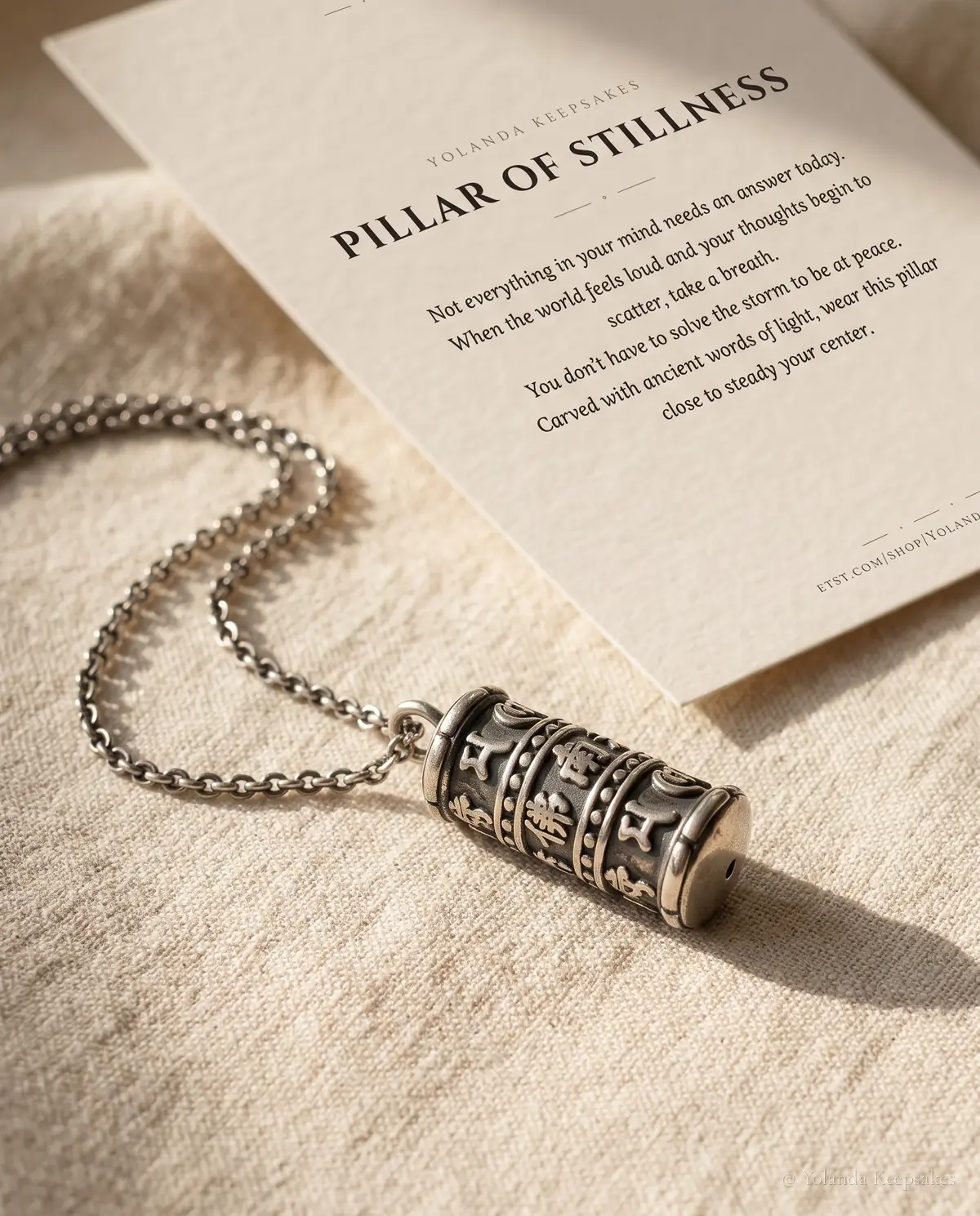
Ritual One: The 10-Second Desk Reset (Between Meetings)
This routine is designed specifically for open offices, video calls, and crowded transit. You do not need to close your eyes or step away from your chair.
Repeated three or four times across a demanding workday, this small physical cue builds a reliable habit loop: fingers touch the piece → breath deepens → posture softens. Over a few weeks, simply noticing the clasp or cylinder against your collarbone becomes an effortless reminder to slow your pace.
Ritual Two: Five Breaths on Your Wrist (Commutes & Errands)
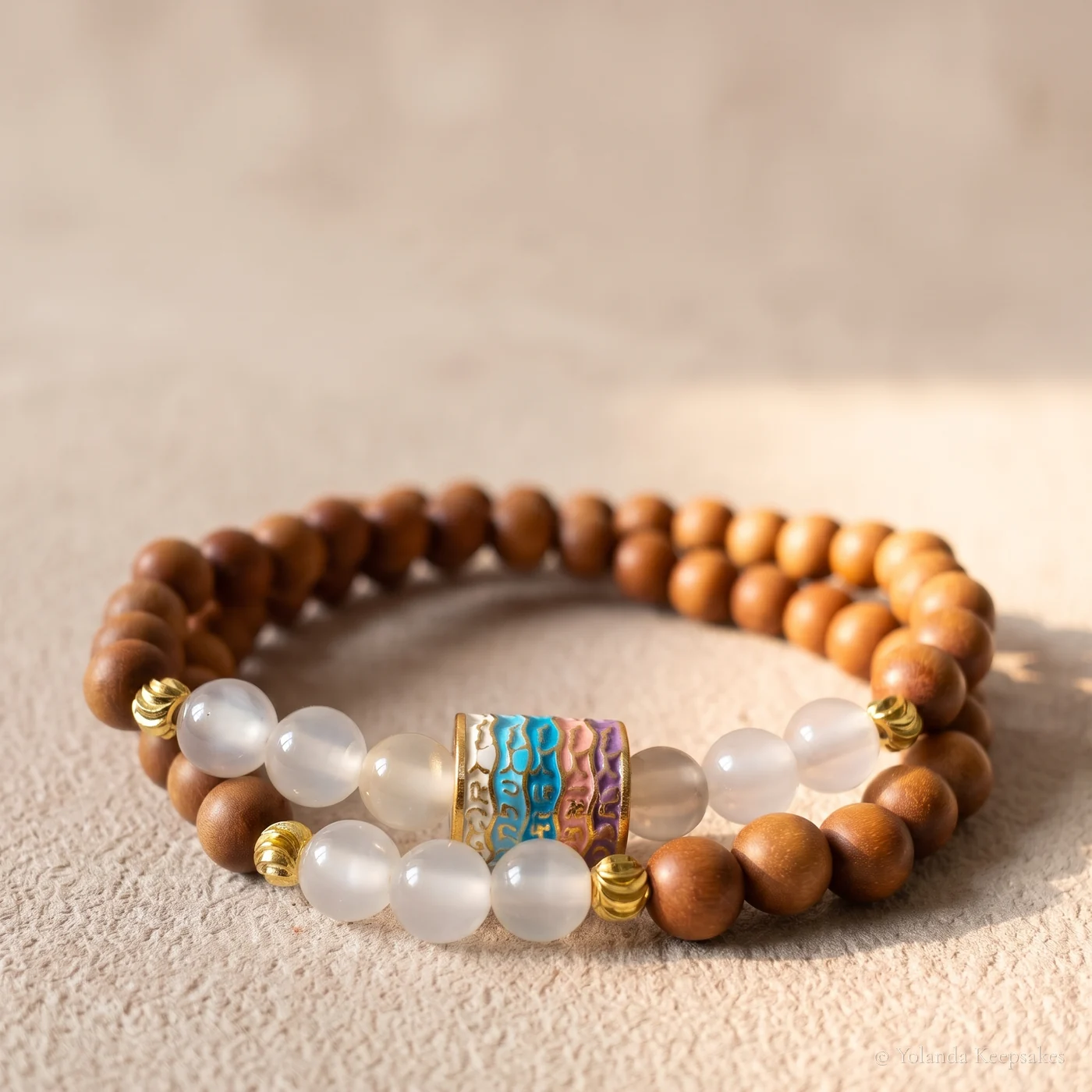
If you prefer not to reach toward your neckline in public, a wrist-level bead piece offers an equally discreet rhythm. Smooth wood beads paired with cool translucent chalcedony stones create a natural tactile contrast under your thumb while you wait for a train, sit in a parked car before walking inside, or take a midday walk around the block.
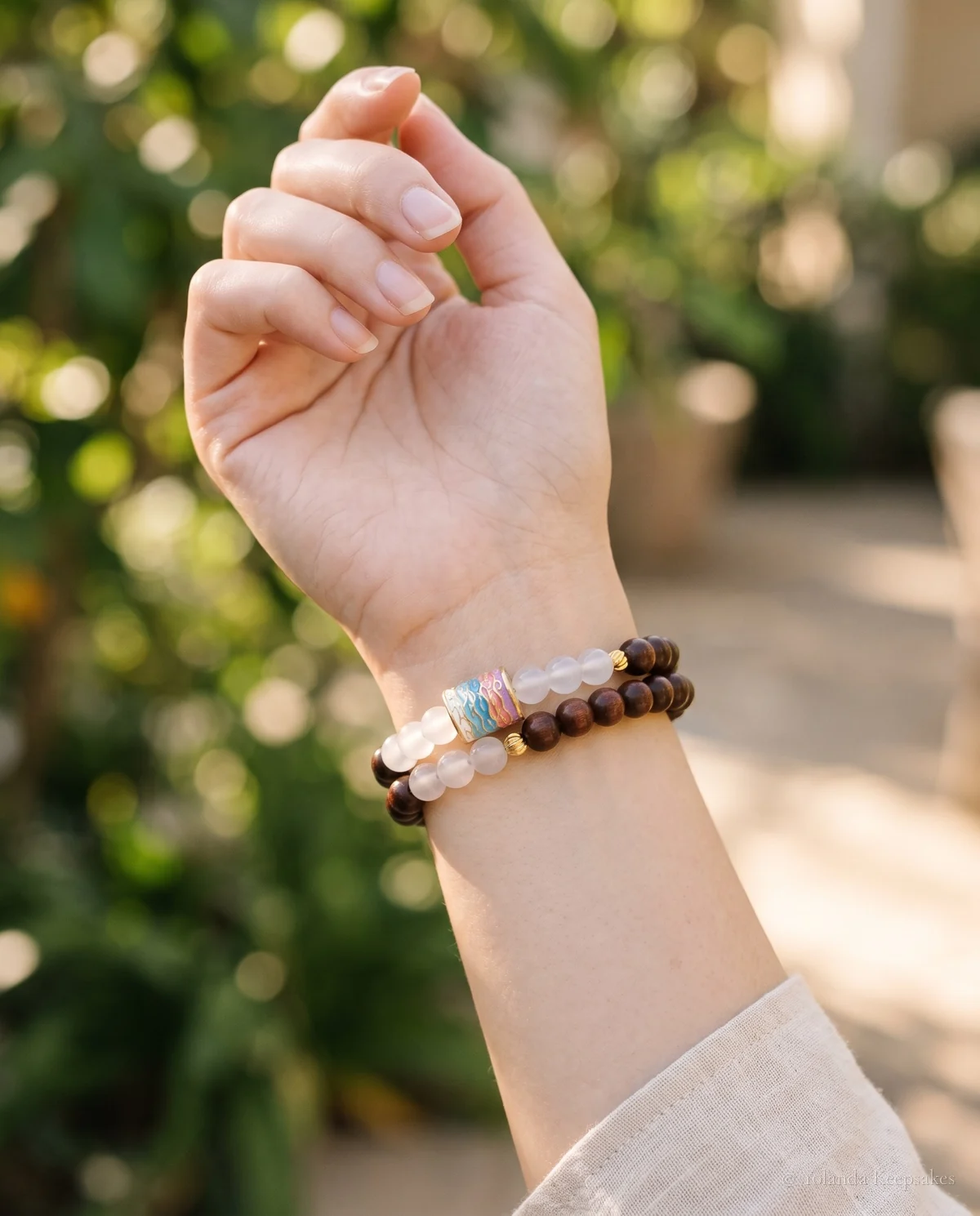
Hold one bead between thumb and forefinger for one full inhale and exhale, then move gently to the next bead. Five unhurried breaths take less than forty seconds—short enough to fit inside any errand, yet long enough to separate a stressful morning from the next conversation.
Ritual Three: The 60-Second Evening Transition
Many women wear their jewelry all day without realizing how powerfully taking a piece off can close the workday. Instead of tossing a necklace onto a crowded dresser while scrolling your phone, turn those sixty seconds into a deliberate boundary between public demands and evening rest.
Choosing the Right Tactile Piece for Your Routine
- Choose a spinning prayer wheel necklace if you spend most of your day at a desk, on video calls, or in quiet meetings where silent finger movement feels most natural.
- Choose a wood-and-stone bracelet if you commute, walk frequently, or like counting slow breaths along individual beads without drawing attention.
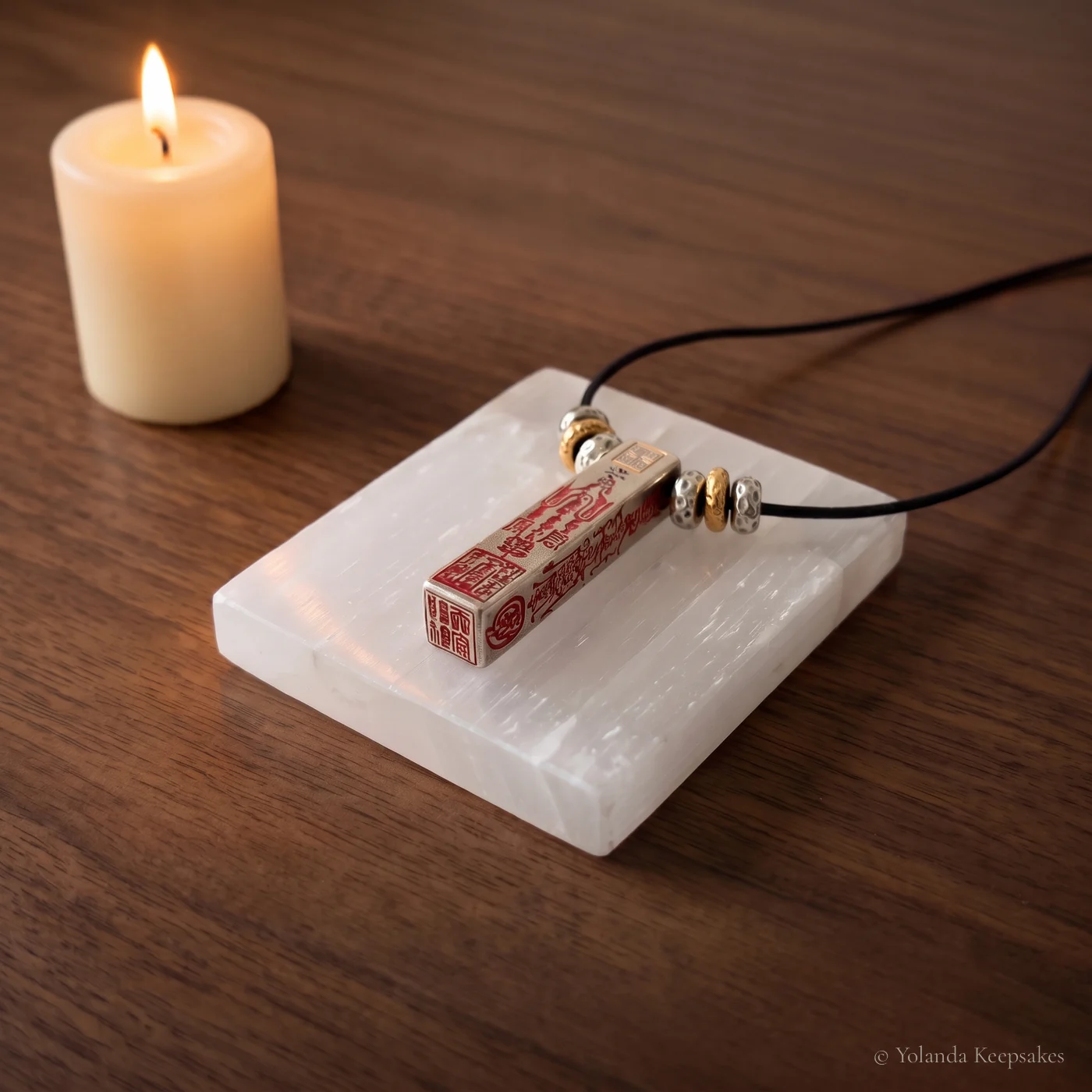
- Choose a bar talisman or engraved medallion if you prefer a still, cool surface to hold quietly during evening journaling or morning intention setting.
Editorial note: All grounding routines shared here are personal mindfulness habits inspired by traditional craft rather than medical guidance.